Male Lions
When people picture a lion, they imagine the ultimate symbol of power. The “King of the Jungle.” A fearless ruler of the savanna. A majestic predator commanding respect from all living creatures.
Which is funny.
Because if you actually follow a male lion around for a full day, you’ll find out how much of a loser they truly are.
Male lions spend up to 20 hours a day resting. Not hunting. Not ruling. Not doing paperwork related to their kingdom.
Meanwhile, the lionesses are out running a coordinated hunting operation like a well-organized military unit.
But let’s not get ahead of ourselves. Let’s start at the beginning.

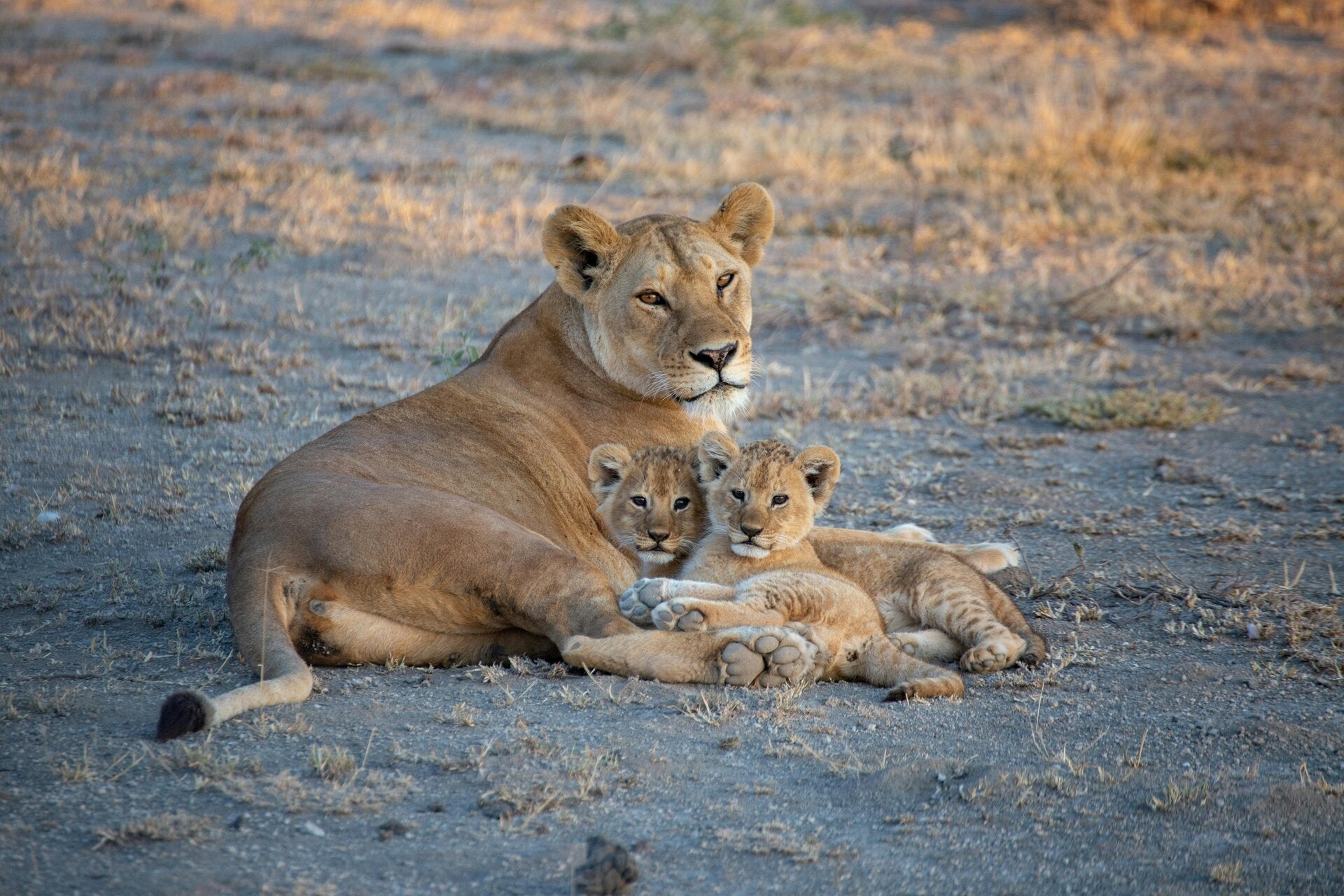
Future King, Current Liability
A male lion cub is born after about 110 days of pregnancy, weighing around 1–2 kilograms. For the first weeks of life, his mother hides him and his siblings in dense vegetation to keep them safe from predators. Hyenas, leopards, and even other lions would happily turn a baby lion into a quick snack.
During this time the mother does everything: She protects the cubs, feeds them and moves them between hiding spots.
The father? He’s usually somewhere else in the territory doing extremely important kingly duties.
Such as sleeping.
Childhood: Play Fighting and Bro Bonding
Once the cubs are old enough, they join the pride.
This is where lion cubs start learning the skills they’ll need to survive. The lionesses teach stalking, teamwork, and hunting techniques. Female cubs pay close attention because they’ll grow up to become the pride’s primary hunters.
Male cubs participate too, but they’re mostly busy wrestling each other like a group of overexcited gym bros.
Male lions form extremely strong bonds with their brothers and other young males. They groom each other, nap together, and spend a surprising amount of time cuddling. Researchers regularly observe adult male lions nuzzling, licking, and even mounting each other. It’s usually a mix of bonding, dominance behavior, and general lion weirdness. They probably thought they were joining a different kind of pride, to which I say, period king.
Adolescence: Congratulations, You’re Homeless
At around 2–3 years old, the pride’s adult males decide it’s time for the young males to leave. They get kicked out. (Sounds like someone we know... Male hyenas, that is).
This is nature’s way of preventing inbreeding and competition. Male lions are forced to disperse and survive on their own.
Suddenly our young lion goes from free food, family protection and a stable home to wandering the savanna with his brothers being unemployed. (Like SOMEONE... and no this time I'm not talking about male hyenas. I'm talking about you).
This stage is incredibly dangerous. Young males struggle to hunt, face constant threats from other predators, and must avoid stronger adult lions who will absolutely not tolerate them on their territory.
Many die during this period.
Those who survive usually form coalitions, small groups of related males who stick together for life. Think of it as a survival pact.
One lion alone is vulnerable. Three lions working together? Now you’ve got a serious takeover crew.


Adulthood: The Great Lion Career Goal
Once the coalition becomes strong enough, they attempt the lion equivalent of a hostile corporate takeover.
They challenge the resident males of a pride.
If they win, they gain control of the pride and its territory.
And just like that, our former homeless wanderer becomes… The King.
What does this new royal lifestyle involve?
To answer your question, it involves roaring loudly to advertise territory, patrolling borders and looking extremely majestic on rocks.
And most importantly:
Be gay with the other lion males.


Lion males tend to exhibit a lot of homosexual behaviour, with about 8% of mountings occurring between two males paired with overly affectionate behaviour such as head rubbing and licking. Some experts say it's to strengthen bonds.
While doing this, however, they waiting for the lionesses to bring dinner.
Lionesses do the majority of the hunting. They’re smaller, faster, and much better at cooperative hunting strategies. While males are capable hunters, they often rely on the females’ teamwork.
Once the hunt is successful, however…
The males frequently eat first. Which is a bold strategy considering they did not participate in the group project.
To be fair, male lions do contribute by defending the pride from rival males. Without them, other coalitions could take over the pride... And male lions LOVE pride.
Pride Takeovers
Lion society also has a brutal side.
When new males take over a pride, they often kill the existing cubs. This behavior forces the females to return to fertility sooner, allowing the new males to pass on their own genes. (And yet Orcas get all the bad rep...)
It’s harsh, but from an evolutionary standpoint it ensures the new males invest their time raising their own offspring rather than someone else’s.
Nature can be efficient and extremely rude.
Prime Years
A successful coalition may control a pride for two to four years.
During this time the males mate, patrol territory and continue their demanding schedule of sleeping for most of the day.
Their mane grows thicker and darker with age, acting as both protection during fights and a visual signal of health and strength.
In lion terms, a big dark mane basically says:
“I am strong, healthy, and ready to fight.”
Also:
“My hair routine is incredible.”
Old Age: The Crown Doesn’t Last Forever
Eventually, younger males arrive and when that happens, the old kings lose their jobs. Rival coalitions challenge them, and if they lose the fight, they’re forced out of the pride. Former kings often end up wandering alone or with a former coalition partner. Old injuries, slower speed, and weaker teeth make hunting difficult.
For animals that once ruled a pride, the final years can be harsh. Many die from starvation or wounds after being dethroned.
Nature gives you the crown. Then nature takes it back.

About me
Despite their impressive mane and extremely confident roaring, lions are actually in trouble.
African lions are currently listed as Vulnerable on the IUCN Red List, and their population has declined significantly over the past century. Lions once roamed across most of Africa, parts of Europe, the Middle East, and Asia. Today they occupy only a small fraction of that range, mostly in scattered populations across sub-Saharan Africa, with one small population of Asiatic lions remaining in India.
The main threats are all very familiar: habitat loss, declining prey populations, conflict with livestock owners, and illegal killing or poaching. As human populations expand, lion territories shrink. When wild prey becomes scarce, lions sometimes turn to livestock, which understandably leads to retaliation from farmers.
So while the male lion is busy sleeping 20 hours a day and letting the lionesses run the entire hunting department, humans are unfortunately doing a very efficient job of making the savanna harder to live in.
If you want to help lions stick around for future generations of dramatic roaring and professional freeloading, there are actually a few things you can do:
Support conservation organizations
Groups working on habitat protection, anti-poaching patrols, and coexistence programs with local communities play a huge role in protecting lions.
Promote wildlife-friendly tourism
Responsible tourism helps fund national parks and conservation programs that protect lions and their prey.
Support livestock protection programs
Many conservation groups help farmers build better enclosures and use deterrents to prevent lion attacks on livestock, reducing the need for retaliatory killing.
Spread awareness
The more people understand lions and the challenges they face, the easier it becomes to support conservation efforts.
The End of the Story
Male lions might spend much of their lives lounging around like extremely muscular freeloaders, but their presence still plays an important ecological role. They defend territories, shape pride dynamics, and help regulate herbivore populations as apex predators.
Still…
If you ever feel unproductive, just remember that somewhere on the African savanna there is a fully grown male lion who has slept for 18 hours today, eaten food someone else hunted, cuddled, mounted and kissed his best friends, and everyone calls him king.
Kind of an incredible career path.
Sources
IUCN. Panthera leo (Lion) Red List assessment: Vulnerable, population decreasing.
African Lion Database Project. Species Status — lions now occupy a small fraction of their historic range.
Nicholson et al. (2025). African lion conservation requires adaption to regional threat severity — threats include habitat loss, fragmentation, prey depletion, conflict, and poaching.
National Geographic. African lion facts — lionesses are the primary hunters; males defend territory.
Chakrabarti et al. (2021). Contrasting levels of social distancing between the sexes in African lions — females handle food and cub-rearing; males focus more on territorial defense and protection from infanticidal males.
Smithsonian’s National Zoo. Lion — gestation is about 3.5 months; females usually give birth to one to four cubs.
Smithsonian’s National Zoo. Lion Cam — lions can rest up to 20 hours a day.
Animal Diversity Web. Panthera leo — male coalitions, pride takeover dynamics, and infanticide.
Add comment
Comments