Waste of hairs: Male Hyenas
If you're a misandrist, you're going to absolutely love this post. The next time you find yourself wishing you were anyone other than yourself, just remember to add the disclaimer: “except for a male hyena.” And if you already are a male… well, the comparison might feel a little too familiar.
Hyena males have it tough.
In the world of spotted hyenas, society is ruled almost entirely by females. They are bigger, stronger, and sit firmly at the top of the clan’s hierarchy. Even the lowest-ranking female outranks the highest-ranking male.
Life for a male hyena is a constant lesson in patience, submission, and survival. And to make matters even more humbling, even the one feature that supposedly defines being male isn’t entirely unique to them. Female spotted hyenas possess a remarkable organ called a pseudo-penis, an enlarged clitoris that closely resembles the male reproductive organ. It’s just another reminder that in hyena society, females truly dominate every level of life. Their world reveals one of the most fascinating and unusual social systems in the entire animal kingdom.

From 100 to 0
Believe it or not, like us humans, the best time in a male hyena’s life is right at the beginning.
When a male spotted hyena is born, he actually has a pretty good deal going. Hyena clans operate under strict matriarchal hierarchies, meaning females dominate everything. But baby males temporarily benefit from their mother’s rank. If their mother is high in the clan, the cub gets to sit comfortably near the top as well.
As a cub, a male hyena stays close to his mother. Cubs rely heavily on their mother’s milk and protection, and they often compete with siblings for resources.
For a short moment, life is good.
He has protection.
He has access to food.
He even outranks some adult hyenas.

But this golden age doesn’t last long. Once the male hyena reaches a certain age, his golden spot at the hierarchy gets taken away. In spotted hyena society, every single female outranks every single male. No debate. No elections. No chance to argue your case. If the male cub has a sister, she already outranks him socially and she will continue climbing the hierarchy as she grows up. Meanwhile, his future is already sealed.
Because while females stay in the clan they were born into for life, males do not.
And things only get worse from there.

Exile: Time to Leave Home
At around two to three years old, a male hyena is forced to leave the only clan he has ever known.
The biological purpose of life is to spread your genes, and how is the male supposed to do that if the females of his clan don't want to mate with him?
I suppose this is natures way to avoiding inbreeding.
Leaving isn’t optional. Males must disperse and search for a completely different clan to join. So one day he gets kicked out from home and begins wandering the dangerous savanna alone, hoping another clan might tolerate his presence.
And emphasis on tolerate.
Because joining a new clan is not exactly a warm welcome.
Joining a New Clan (Welcome to the Bottom)
Let’s say a wandering male finally finds another hyena clan. Does he get promoted? Accepted? Does he earn respect for surviving the journey?
Absolutely not.
He might not even be accepted into the clan. He'll be shooed away, forced to roam alone furthermore.
However, let's say he gets accepted: He enters the clan at the very bottom of the hierarchy. Every female outranks him. Every cub outranks him. And he gets bullied. Even newly arrived males outrank him if they joined before he did. Hyena societies follow a strict queue system for males. He reaches higher up in the hierarchy only when ones above him dies, or new males join.
But that’s it. He cannot fight his way up. He can certainly try, but what good does that do?
If he tries to challenge a female, he will lose immediately. Female hyenas are larger, stronger, and heavily supported by other clan members. So the male learns an important survival skill:
Submission. (How I wish human men were the same).
He eats last. He waits patiently at carcasses. He avoids conflict whenever possible. Life becomes a constant exercise in humility.
The Dating Game (Also Terrifying)
Now comes the part that truly seals the male hyena’s fate: trying to mate.
Because finding a mate in hyena society is… complicated.
Male hyenas are actually intimidated by females, and researchers have observed them showing clear signs of nervousness when approaching one. Some males literally shiver with fear when trying to court a female.
Their strategy mostly involves slow, awkward persistence. A male may follow a female around for long periods of time, testing how close he can get before she reacts. If she notices him getting too bold, she may charge at him and the male will immediately run away.
Then come back later.
Then run away again.
Then come back again.

This repeated approach-and-retreat behavior has actually been documented by researchers studying hyena courtship. Males slowly try to gain the female’s tolerance through submissive behavior rather than dominance.
Eventually, after a very long period of patience, the female may decide he is acceptable.
Congratulations.
He’s right where he wants to be, guys. Don’t worry.
A Lifetime of Being Last
If a male hyena successfully stays in a clan long enough, he might eventually move slightly up the male hierarchy, but only because other males die or new males arrive beneath him. He will never outrank a female.
Not once in his entire life. So he spends his adulthood doing what male hyenas do best: Waiting. Submitting. Trying not to get bullied away from dinner.
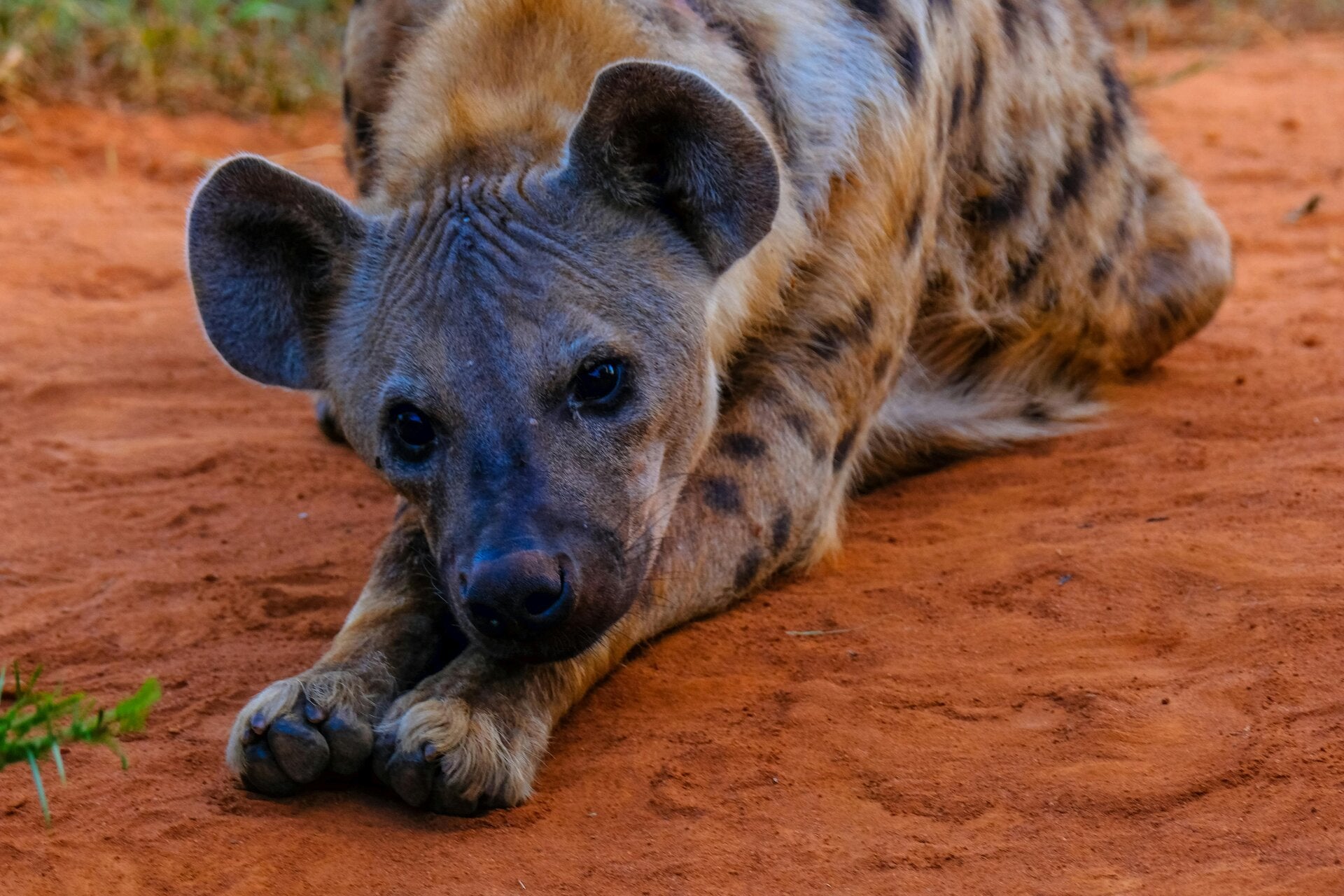
The End of the Story
Male hyenas can live 10–15 years in the wild, sometimes longer in protected environments. By the time a male reaches old age, he may have spent more than a decade navigating the same system:
Bottom of the hierarchy.
Careful social behavior.
Occasional success in reproduction if he was patient enough.
It might sound brutal, but this system actually works extremely well for hyena society. Female dominance helps maintain order, reduces unnecessary fighting, and ensures experienced mothers control the clan’s leadership.
Coincidentally, or maybe not, hyenas also aren’t currently facing extinction. Perhaps letting the females run the entire hierarchy has something to do with that.
Still…
If you’re ever feeling unlucky in life, just remember:
At least you weren’t born a male hyena.
Sources
Holekamp, K. E., & Smale, L. (1991). Dominance acquisition during mammalian social development: The “inheritance” of maternal rank. American Zoologist.
National Geographic. (n.d.). Spotted Hyena Facts.
https://www.nationalgeographic.com/animals/mammals/facts/spotted-hyena
Smithsonian National Zoo. (n.d.). Spotted Hyena (Crocuta crocuta).
https://nationalzoo.si.edu/animals/spotted-hyena
Tracy (2014, December 8). A Dating Guide for Male Hyenas.
https://hyenaproject.com/blog
Holekamp, K. E., Sakai, S. T., & Lundrigan, B. L. (2007). Social intelligence in the spotted hyena. Philosophical Transactions of the Royal Society B.
Add comment
Comments
Poor male hyenas :(