Orcas: Evil Geniuses of the Ocean?
If an orca ran (swam?) into this room, everybody would be scared. But not me. Because I know wild orcas almost never kill humans (zero confirmed deaths ever, and only one non-fatal bite reported, probably mistaken identity).
And yet… somehow, orcas have earned the title of “ocean’s evil genius.” You know the type: black and white tuxedo, looks adorable, but secretly plotting your doom while slicing through the waves like James Bond on fins. Thanks, Blackfish, for convincing everyone that these animals are the marine version of Hannibal Lecter.

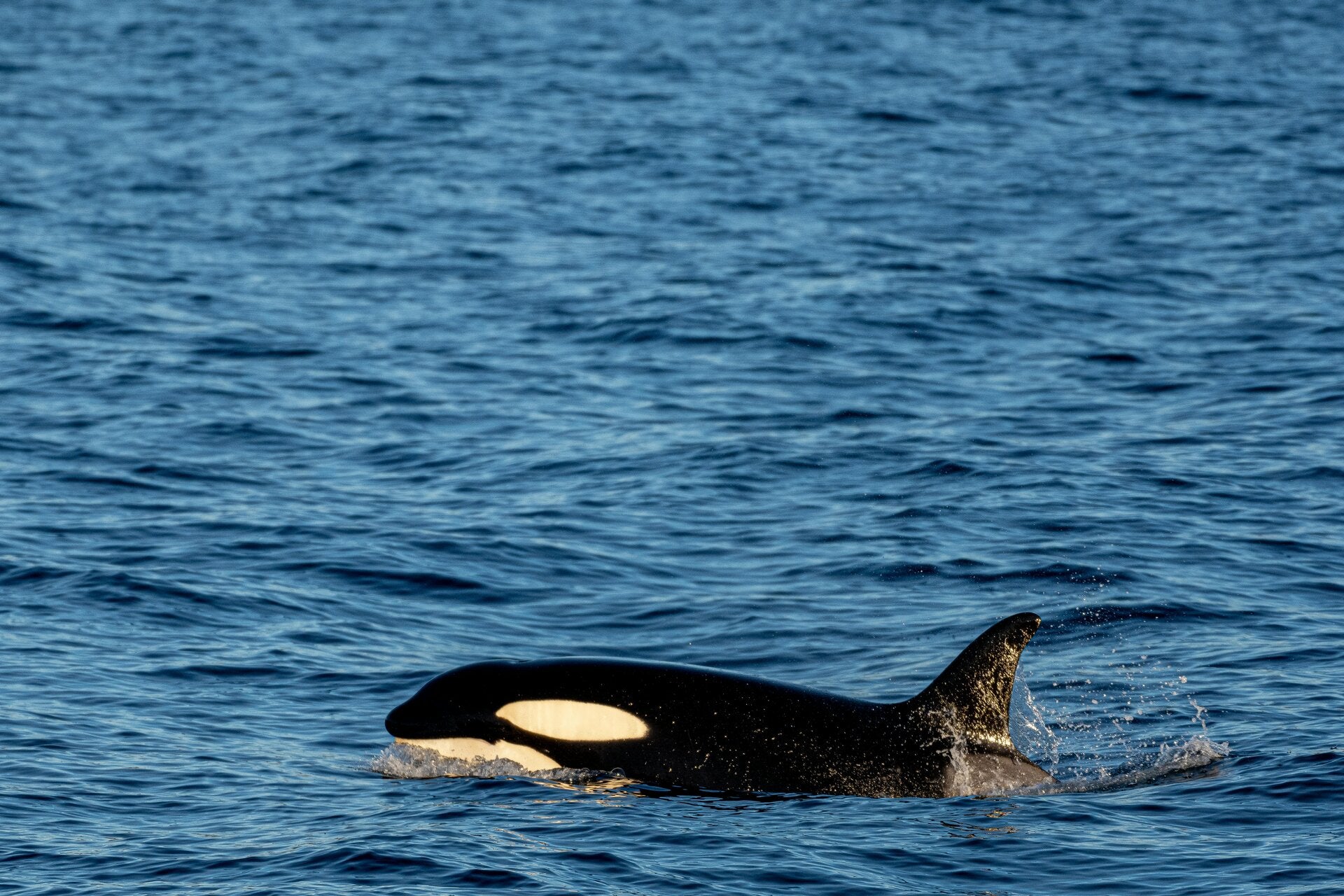
Apex Predator, Not Supervillain
Orcas are apex predators. They hunt, they communicate, and they strategize. Pods work together to catch seals, fish, and even whales. Sometimes, yes, they toss their prey around. Sometimes they ram boats. But that’s not evil. That’s literally what apex predators do. Lions don’t get villain points for hunting zebras; why are orcas getting a bad rep? Racists.
Humans are basically the clumsy, hairless seals of the water. And orcas know it. That massive dorsal fin slicing past your kayak isn’t a sneak attack, it’s curiosity. Or maybe a “hmm, is that food?” moment.
Social Life
Orcas live in pods, tight-knit, multi-generational family units. They have complex vocal dialects, recognize each other across decades, and even have babysitters for the calves. Think of them as your aunt’s family group chat, but with echolocation. Nightmare (jk).
Pods have hierarchies, but it’s mostly cooperative. The matriarch leads, and the rest of the pod follows her cues. They teach hunting techniques to the young, practice strategic hunting patterns, and occasionally play. Yes, play. With seals, for example. And yet, people watch a single clip of an orca tossing a seal and scream “evil mastermind!” Calm down, nature documentary fandom.
To give you more perspective on how they're NOT evil, let's follow an orca through its life.

Birth: Welcome to the Ocean, Baby
An orca calf is born after about 17 months of pregnancy. When the calf pops out, it weighs about 400 pounds. Cute, squishy, and basically helpless. Calves nurse for over a year, sometimes two, and stick close to their mothers.
Good thing about this early life? They learn everything about survival from the best teachers in the ocean: their moms, aunts, and grandmas. These matriarchs are basically the professors of whale school, teaching hunting techniques, communication signals, and social etiquette.
Bad thing? Survival is tough. About 30% of calves die in the first year, mainly from starvation or predation from sharks and even other orcas. So yeah, life starts hard, even if you’re a “villain”.
Childhood: Learning the Ropes
Once the calf grows past infancy, life becomes easier. They play a lot, chasing siblings, riding waves, practicing hunting maneuvers. Play isn’t just fun; it’s training. The ocean doesn’t give participation trophies. Mistakes during practice can mean no dinner, or worse, lunch for someone else.
This playtime teaches strategy, cooperation, and communication skills that orcas use to protect their pods and hunt efficiently. They are incredibly smart; some scientists compare their problem-solving skills to dolphins and even chimpanzees.
Orcas occasionally show what humans interpret as “cruelty,” like tossing prey. But here’s the secret: it’s training the kids, testing food, or playing with physics. No evil agenda here, just education.


Adolescence: Finding Your Place in the Pod
As orcas hit adolescence, their personalities emerge. Some are mischievous, others studious. They learn to hunt cooperatively in their pod, sometimes using incredibly elaborate techniques, like creating waves to knock seals off ice floes.
This is where orcas become ecosystem superheroes. By hunting sick or weak seals and fish, they help keep prey populations healthy, basically nature’s quality control. Without them, we’d have sad, overpopulated seal conventions everywhere. Take humans for example.
Adulthood
Adult females live 50–90 years, and males 30–60. Females become matriarchs, leading pods, teaching survival skills, and guiding social life. Males often roam more but remain essential for hunting and breeding.
Orcas in their prime are both terrifying and inspiring. They regulate prey populations, teach the next generation, and sometimes show altruism, helping injured pod members, babysitting calves, and even rescuing other animals (including humans on rare occasions).
Life isn’t perfect. Hunting can be brutal, and their strength means they occasionally kill more than they need. But this is just nature doing its thing, nothing personal, no villainy involved.
Elder Years: Wisdom in the Waves
Older orcas, especially matriarchs, are walking encyclopedias of ocean knowledge. They remember decades of food sources, migration routes, and social lessons. Losing an elder is devastating for the pod, it’s like deleting Google but louder and wetter.
Age brings slower swimming, more difficulty hunting, and vulnerability to disease. But elders pass down survival knowledge to younger generations, ensuring the pod’s continuity.

Death: The Final Dive
When orcas die, it’s usually from age, illness, or starvation caused by human impacts like pollution or prey loss. Their absence changes pod dynamics and can ripple through the ecosystem. But unlike the horror movies, there’s no revenge plot. They just quietly stop swimming.
Conservation
While orcas (aka killer whales) as a species aren’t globally endangered, they’re officially “Data Deficient” according to the IUCN. Some local populations are in serious trouble. Yes, that tuxedoed, seal-tossing genius you’ve been laughing at on documentaries? Some of them are fighting for survival.
Take the Southern Resident killer whales in the Pacific Northwest. Fewer than 80 of these individuals remain. That’s fewer than your average high school graduating class. And unlike us, orcas can’t just order takeout, they need Chinook salmon, and there aren’t enough to go around.
Add on top of that: Toxic contamination, PCBs and other pollutants build up in their blubber over time, causing reproductive issues and disease. Humans left them a chemical hangover. Underwater noise pollution, Boats, sonar, and shipping lanes mess with their echolocation, hunting, and communication. Imagine trying to play Marco Polo while someone’s revving a speedboat nearby.
Other populations face similar threats: habitat degradation, pollution, and even capture for marine parks. While there may be roughly 50,000 orcas worldwide, populations are split into different ecotypes that don’t interbreed. That means some groups are thriving, and others are teetering on the edge of extinction, so it’s not enough to just “count whales” and call it a day.
How You Can Help?
If you want to keep wild orcas swimming free and away from their bad rep:
Eat sustainable seafood
Support fisheries that protect salmon populations. Your sushi habit could actually save a pod.
Reduce plastic and chemical pollution
These toxins accumulate in the ocean food chain, eventually ending up in orca blubber.
Keep your distance in the wild
Don’t bother the whales. They’re not plotting against you, but they do get stressed by human interference.
Support marine conservation organizations
Groups like NOAA Fisheries and local whale sanctuaries fight for orcas’ survival and protect their habitats.
Say no to captive shows
Those “performing orca” spectacles aren’t fun for the whales. They’re basically the marine version of forced labor.

So there you have it: the life of an orca. Born huge, playful, brilliant, sometimes terrifying, and occasionally tossing seals like it’s a physics experiment. They’re apex predators, ecosystem superheroes, devoted family members, and oceanic geniuses all rolled into one.
The next time someone calls them “killer whales” with wide-eyed fear, just remember: the real danger isn’t these majestic animals, it’s humans wrecking their food, polluting their home, and thinking a dorsal fin automatically equals evil.
Orcas aren’t villains. They’re wild, complicated, and worth protecting. And if you leave the ocean alone, give them space, and support conservation efforts, maybe one day we can look back and realize the only thing truly scary was underestimating them in the first place.
References
NOAA Fisheries. (2023). Killer Whales (Orcas) and Human Safety. https://www.fisheries.noaa.gov/feature-story/killer-whales-orcas-and-human-safety
Ford, J. K. B., Ellis, G. M., & Balcomb, K. C. (2010). Killer Whales: The Natural History and Genealogy of Orcinus orca in British Columbia and Washington. University of British Columbia Press.
Wikipedia contributors. (2023). Orca. https://en.wikipedia.org/wiki/Orca
International Union for Conservation of Nature (IUCN). (2023). Orcinus orca: Data Deficient. https://www.iucnredlist.org/species/15421/50370845
Add comment
Comments